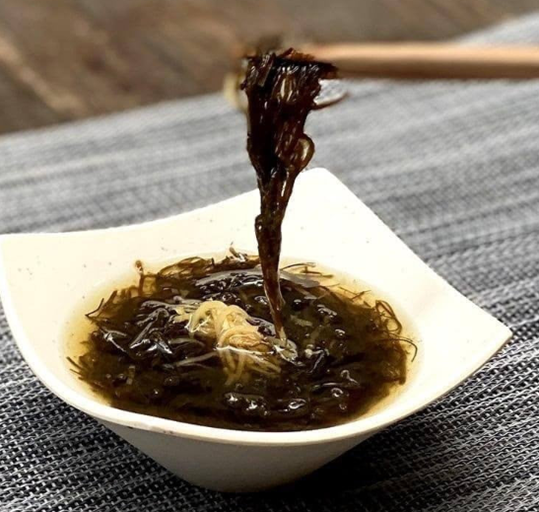
Types of Fucoidan

Fucoidan is not a single compound, but a family of sulfated polysaccharides found mainly in brown seaweeds. Fucoidans can be classified in several ways:

Seaweed Source
Different seaweeds produce structurally distinct fucoidans:

1. Mozuku Fucoidan

Sourced Form : Brown seaweed Cladosiphon okamuranus (primarily cultivated in Okinawa)
Characteristics
  • Relatively high fucose content
  • Contains glucuronic acid
  • Often has a lower degree of branching than some other fucoidans
Research Focus
  • mmune modulation
  • Anti-inflammatory effects
  • Gut health
  • Potential support for cancer therapy (mostly laboratory and animal studies)

2. Wakame (Mekabu) Fucoidan

Sourced Form : Undaria pinnatifida
Characteristics
    • Rich in sulfated fucose residues
    • Often contains galactose
Research Focus
    • Immune function
    • Antioxidant activity
    • Anti-inflammatory activity
    • Potential antiviral properties

3. Bladderwrack Fucoidan

Source: Fucus vesiculosus
Characteristics
  • Classical Type II fucoidan structure
  • Alternating α-(1→3) and α-(1→4) linkages
  • Usually highly sulfated
Research Focus
  • Anti-inflammatory effects
  • Anticoagulant activity
  • Cell-signaling pathways involved in cancer research
  • Tissue regeneration and wound healing

Fucoidan AI Assistant

Hello! I am Fucoidan AI. I provide research-backed info on Fucoidan studies. How can I help you today?
AI is thinking...
Engineered by Syed Ahmar Ali

Disclaimer

The information provided on this website is for educational and informational purposes only and is not intended as medical advice. Fucoidan Research does not diagnose, treat, cure, or prevent any disease. Always consult with a qualified healthcare professional before beginning any new supplement regimen, especially if you are currently undergoing medical treatment.

Disclaimer

The information provided on this website is for educational and informational purposes only and is not intended as medical advice. Fucoidan Research does not diagnose, treat, cure, or prevent any disease. Always consult with a qualified healthcare professional before beginning any new supplement regimen, especially if you are currently undergoing medical treatment.